

Virtual Dressing Room Technology Is Changing How Fashion Brands Present Collections
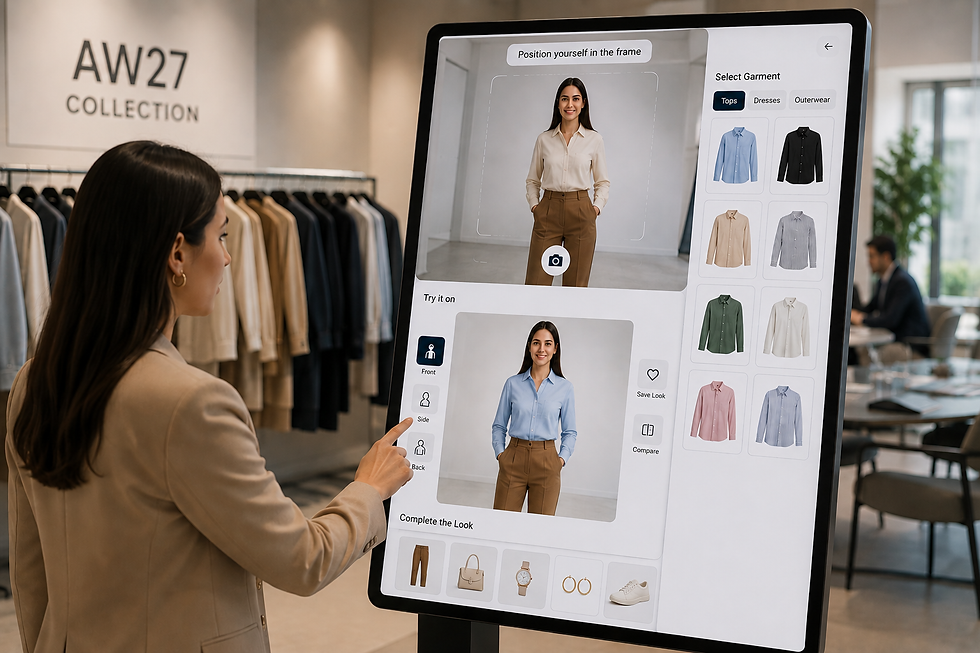
Fashion brands are rethinking how buyers evaluate collections before placing an order. Static images and flat catalogs no longer answer the basic question every buyer asks: how will this actually look and fit? A virtual dressing room solves that gap by letting buyers visualize garments digitally, before a single sample changes hands.
Qartsolutions has built this capability directly into its platform, giving fashion brands a practical way to present collections with more clarity and less guesswork.
The Problem With Static Catalogs and Guesswork Ordering
Buyers placing bulk orders rarely get to touch every garment before deciding on quantities. Photos show one angle, one model, one lighting setup. That is rarely enough information for a confident order.
This creates recurring problems for fashion brands:
Buyers hesitate on fit and proportion, which delays order confirmation
Return and exchange rates increase when garments do not match expectations
Sales teams spend hours answering questions that a proper visual tool could resolve instantly
Catalog fatigue sets in when every collection page looks the same
Industry data supports this pattern. According to Style3D's analysis of virtual try-on adoption, brands using digital fitting tools have reported measurable drops in returns alongside stronger conversion rates. The takeaway is straightforward. When buyers can see how a product will actually sit on a body, they order with more confidence and fewer second-guesses.
Why Every Fashion Portal Needs a Virtual Dressing Room
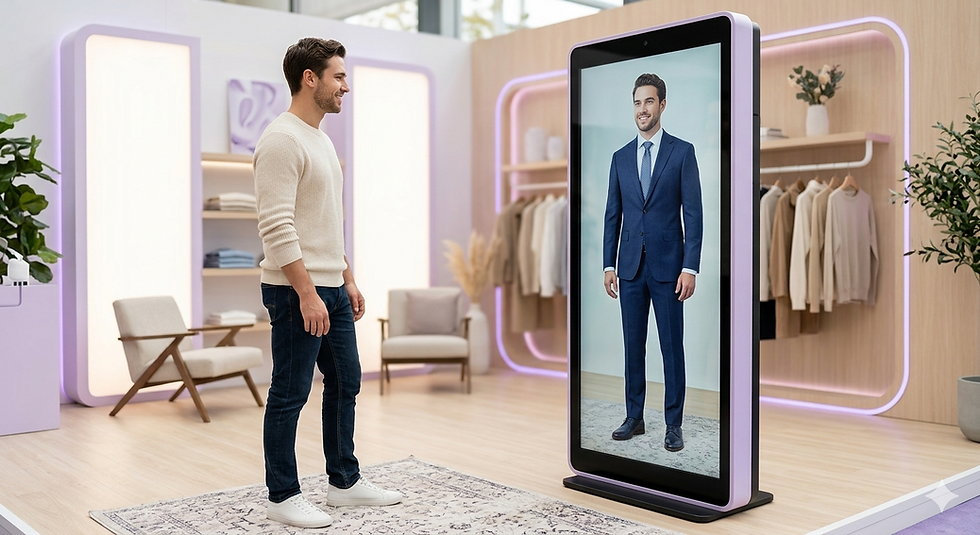
A fashion portal that still relies only on static images is asking buyers to make decisions with incomplete information. A virtual dressing room changes that by giving buyers a realistic preview of fit, drape, and proportion directly inside the ordering flow.
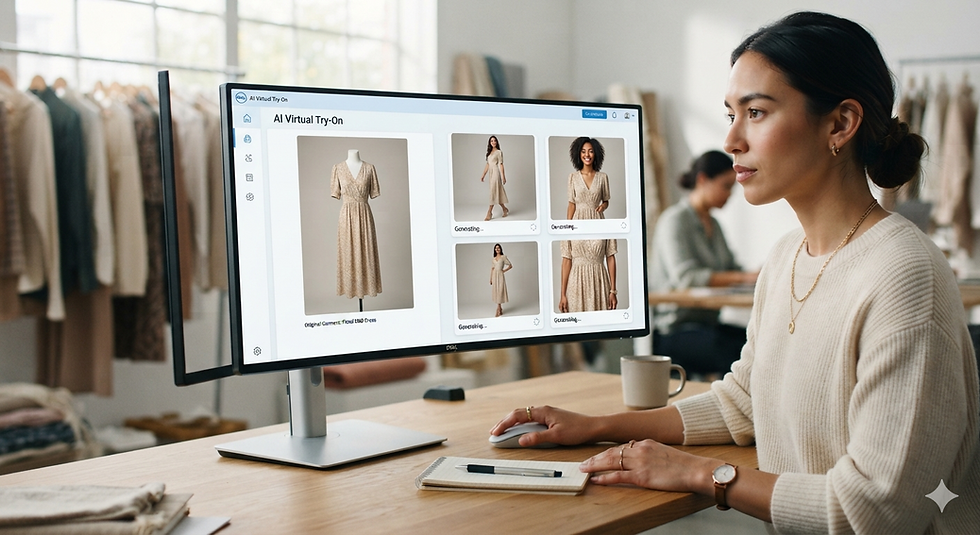
Qartsolutions built its virtual try-on feature with exactly this problem in mind. Instead of buyers scrolling through flat product shots and guessing, they get a visual reference that mirrors what the garment will look like on an actual body type. This shortens the decision cycle and reduces the back-and-forth that typically slows down order confirmation.
Where Virtual Try-On Changes B2B Buying Decisions
The value of a virtual clothes try on feature becomes clearer when you look at specific buying moments. Below is a breakdown of common decision points and how a virtual try on app changes the outcome.
Buying Moment | Without Virtual Try-On | With Virtual Try-On |
Reviewing a new collection | Buyer relies on flat images and assumptions | Buyer sees garment fit and proportion directly |
Comparing similar styles | Buyer contacts sales rep for clarification | Buyer compares visuals independently |
Confirming size ranges | Buyer orders conservative quantities to limit risk | Buyer orders with more accurate confidence |
Post-order returns | Higher mismatch between expectation and product | Fewer disputes tied to fit misunderstanding |
This is not a theoretical benefit. As 3DLOOK's breakdown of virtual clothing try on points out, brands blending physical and digital previews are seeing stronger engagement across both online and in-store channels. The same principle applies directly to B2B ordering, where buyers are making decisions for entire retail assortments rather than single items.
Bringing Virtual Try-On Into a B2B Portal for Fashion Industry Use
A b2b portal for fashion industry operations needs more than a product list. It needs a way to let buyers try on clothes online without waiting for physical samples to travel between showrooms and retail partners.
Qartsolutions approaches this the same way it approached 360 product visualization for buyer confidence, by treating visual clarity as a core requirement, not an added feature. An online fitting room built into the ordering process means buyers spend less time second-guessing and more time confirming orders. For a fashion b2b platform managing multiple retail accounts across regions, this consistency matters at scale.
Order Management Clothing Workflows Improve With Better Fit Visualization
A virtual fitting room does not just help buyers make faster decisions. It also reduces downstream friction in order management clothing workflows. When buyers order with clearer expectations, fewer orders get revised, cancelled, or returned after delivery.
This connects directly to broader fashion b2b order management challenges. Disconnected visual and stock data often leads to order confirmation problems later in the cycle. A virtual try on clothes feature closes part of that gap early, before the order is even placed.
Getting Started With a B2B Fashion Portal Built for Visual Confidence
Fashion brands presenting collections through a B2B fashion Platform need buyers to trust what they see. A virtual dressing room gives buyers that trust without requiring physical samples for every style, every season.
Qartsolutions built its virtual try-on capability to support exactly this outcome, helping brands present collections with clarity while reducing the operational friction that comes from mismatched expectations. For brands managing growing retailer networks, this kind of visual accuracy is becoming a standard expectation rather than an optional upgrade.

Comments