

10 Best AI Virtual Try On Software for Fashion Retailers Compared (2026)
Virtual Try On technology has moved from a novelty feature to a standard requirement for fashion retailers in 2026. Shoppers and buyers now expect to see how a garment looks before committing to an order, whether they are browsing a retail app or reviewing a catalog at a digital showroom.
This shift has pushed brands to search for a dependable virtual try-on solution that reduces returns, speeds up decision making, and improves buyer confidence. In this guide, we compare ten leading AI Virtual Try On platforms, including the B2B focused solution built by QArt Solutions.
Why Virtual Try On Technology Matters for Retailers

Retailers that delay adoption risk losing buyers to competitors already using a virtual try on app. According to a recent Shopify report on AR try-on technology, brands using augmented reality based fitting tools have reported stronger online sales alongside a noticeable drop in returns.
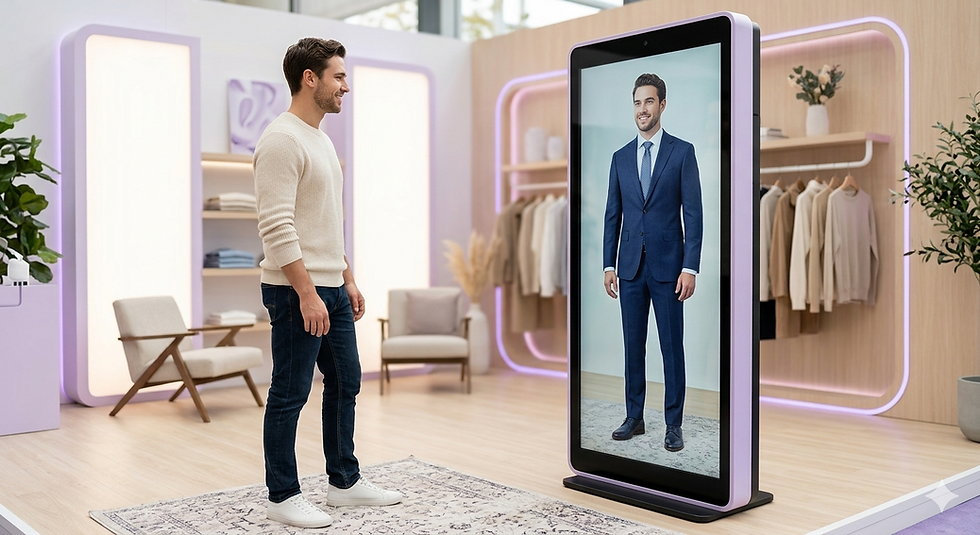
A virtual dressing room removes the guesswork from sizing and fit. Buyers no longer need to try on clothes online through slow, one item at a time processes. They upload a photo or select a body profile and instantly preview the garment.
Reduces return rates caused by sizing errors
Increases time spent browsing a catalog
Builds buyer confidence before checkout
Choosing the Right Virtual Try On App for Your Business
Not every tool serves the same purpose. Some are built for individual consumers, while others are designed for brands managing large catalogs and repeat buyers. Before selecting a platform, retailers should review this QArt Solutions guide on DAM Features to understand how catalog presentation affects buyer decisions.
Key factors to evaluate include:
Accuracy of body mapping and garment draping
Speed of image generation for large catalogs
Availability of an online fitting room across mobile and desktop
Integration with a B2B fashion portal for order management
API access for existing systems
Quick Comparison Table
Platform | Best For |
QArt Solutions AI Virtual Try-On | B2B fashion brands, distributors, tradeshows, digital showrooms, and order booking |
FASHN.ai | Enterprise AI virtual try-on API for fashion retailers |
DrapeAI | Fashion brands, ecommerce, personalized virtual fitting |
True Fit | Fit and sizing intelligence for footwear and apparel retailers |
Style.me | 3D virtual fitting room with size recommendation |
Vyking | AI and AR virtual try-on for fashion ecommerce |
FittingBox | Size recommendation and virtual fitting |
Virtusize | Smart sizing and virtual try-on for fashion e-commerce |
Google Virtual Try-On | Consumer shopping experience with AI try-on |
Doji AI | AI outfit visualization for consumers |
Below is a detailed look at each platform.
1. QArt Solutions AI Virtual Try-On
QArt Solutions is built specifically for fashion brands, distributors, and retail teams operating in a B2B environment. Unlike most tools on this list, it does not stop at visualization.
The platform connects a virtual clothes try on experience directly to catalog browsing and order booking. Buyers can view, select, and place orders in a single session, without switching between separate tools.
This makes it especially useful for tradeshows and digital showrooms, where brands need to present large product ranges without relying on physical samples for every meeting.
Key features:
Built for a B2B fashion portal, not individual consumer shopping
Realistic virtual try on clothes preview for every product in the catalog
Order booking linked directly to the try-on session
Full control over catalog updates, pricing, and product availability
Supports large catalogs without added photography costs
Reduces dependency on physical samples at tradeshows and buyer meetings
Works across devices, suited for remote buyer meetings and in-person showrooms
Designed for repeat B2B buyers, not one time consumer purchases
2. FASHN.ai
FASHN.ai offers an enterprise grade API for fashion retailers that want to integrate virtual try-on directly into their existing platforms rather than use a separate storefront tool. It focuses on photorealistic rendering, preserving fabric texture and print detail during generation.
Since it is delivered as an API, FASHN.ai works best for retailers with development resources who want to embed a virtual try on clothes feature into their own app rather than adopt a ready made interface.
3. DrapeAI
DrapeAI targets fashion brands and ecommerce stores looking for a personalized virtual fitting experience. The platform pays close attention to how fabric behaves on different body types, giving shoppers a clearer sense of drape and fit before purchase.
It is generally aimed at individual shopper experiences rather than B2B catalog or order management, making it a better fit for direct to consumer brands than distributors.
4. True Fit
True Fit is a fit and sizing intelligence platform trusted by more than 29,000 brands, including major footwear and apparel retailers. Instead of only showing a garment, it uses two decades of purchase and returns data, sometimes called the Fashion Genome, to tell shoppers exactly which size to buy across different brands.
This makes True Fit especially useful for retailers dealing with size bracketing, where customers order multiple sizes and return the ones that do not fit. By connecting real fit outcomes across thousands of brands, the platform helps shoppers get their correct size on the first try, reducing returns without needing a fully rendered visual preview.
5. Style.me
Style.me offers a 3D virtual fitting room and styling plugin that combines visualization with actual size recommendation, rather than focusing on appearance alone. Shoppers enter basic measurements or select a body shape to generate a personalized avatar, then try on garments and see fit detail before adding items to cart.
This dual focus on sizing and visualization sets Style.me apart from tools that only show how a garment looks. Brands such as Boda Skins have reported meaningful reductions in returns after implementation, along with longer site engagement, since shoppers can check garment fit across multiple layers without leaving the online store.
6. Vyking
Vyking combines AI and AR to deliver virtual try-on for fashion ecommerce, with a particular focus on footwear and accessories. Shoppers can preview products on their own feet or body through a mobile camera in real time.
Retailers in the footwear and accessories space often choose Vyking because general purpose try-on tools are not always optimized for these product types.
7. FittingBox
FittingBox specializes in size recommendation alongside virtual fitting, making it a common choice for eyewear and apparel brands that want to reduce sizing related returns rather than just offer a visual preview.
This dual approach, combining an online fitting room with sizing intelligence, sets FittingBox apart from tools that focus purely on appearance.
8. Virtusize
Virtusize combines smart sizing with virtual try-on for fashion e-commerce, working with well known brands such as Ralph Lauren and Adidas. Shoppers compare a product's measurements against clothing they already own, giving a clearer sense of fit before checkout.
Retailers using Virtusize have reported meaningful reductions in size related returns across both apparel and footwear categories. The setup is straightforward, requiring only a script tag rather than a full development project, which makes it accessible for mid-sized retailers as well as larger enterprise brands.
9. Google Virtual Try-On
Google's virtual try-on feature is integrated into its shopping experience, letting consumers preview garments across a wide range of models directly within search results. It requires no setup from retailers since it operates at the platform level.
The tradeoff is control. Brands have limited ability to customize the experience or tie it to a dedicated online fitting room on their own website.
10. Doji AI
Doji AI is built for consumers who want to visualize outfits before buying, often used for personal styling rather than large scale retail catalogs. It focuses on helping shoppers experiment with combinations rather than serving as a catalog wide solution.
This makes it a lighter option suited to individual shoppers, not distributors managing bulk catalogs or B2B buyer relationships, which is where platforms like QArt Solutions are positioned instead.
How QArt Solutions Stands Out as a B2B Fashion Portal
Many virtual try-on tools stop at the visualization stage. QArt Solutions extends this by connecting the try-on experience to catalog management, order booking, and buyer communication in one B2B fashion portal.
This matters for brands managing large product ranges across seasons. Instead of relying on physical samples for every tradeshow or buyer meeting, teams can present garments through the platform and let buyers explore fit and style directly on screen.
Centralized catalog with real time updates
Order booking linked to try-on sessions
Support for large product volumes without added photography costs
Benefits of a Virtual Fitting Room for a B2B Fashion Platform
A well built virtual fitting room does more than reduce returns. As reported by Business of Fashion, AI powered visualization tools are reshaping how brands present products across the buying journey, not only at the point of sale.
For a B2B fashion Platform, this translates into measurable operational gains:
Faster buyer decisions during tradeshows and remote meetings
Lower dependence on physical sampling
Consistent product presentation across every catalog
Final Thoughts
Fashion retailers evaluating a virtual try on app in 2026 need to consider more than image quality. Platforms that connect visualization with catalog and order management offer a clearer path to efficiency. QArt Solutions was built with this in mind, giving fashion brands a single platform to showcase products, support buyer decisions, and manage orders without added complexity.


Comments