

How Fashion Brands Manage Region-Specific Assortment
Updated: Jun 11
A retailer in Mumbai does not need the same collection as one in Milan. A buyer in Stockholm has different seasonal requirements than one in Dubai. Yet many fashion brands still build and distribute a single catalog across all markets, then deal with overstock, missed opportunities, and frustrated retailers.
This article breaks down how fashion brands approach localized assortment management, what data and tools make it work, and where most operations still fall short.
Why Region-Specific Assortment Matters in B2B Fashion
Region-specific assortment is the practice of curating different product mixes for different geographic markets based on climate, cultural preferences, buying behavior, and seasonal cycles.
SS27 buying is already underway, and regional assortment decisions made now will define shelf performance for the entire season. Brands without a clear SS27 assortment planning strategy are already behind.

It is not a new concept. Zara has built localized buying into its international expansion strategy for decades, adjusting collections by country to reduce unsold inventory and improve turnover. The challenge for most brands is that localized assortment planning has historically required significant manual coordination, and the tools to manage it at scale have been slow to arrive.
According to research covered by NuORDER's assortment planning blog, localized assortment planning allows brands to effectively cater to regional trends and cultural preferences, making it one of the highest-impact decisions in the seasonal buying cycle.
For B2B operations specifically, the stakes are higher. When a brand presents the wrong assortment to a regional retail partner, it wastes both parties' time during order booking, creates inventory imbalances, and reduces the retailer's confidence in the brand's understanding of their market.
The Key Factors Behind Region Specific Assortment Decisions
Effective region-specific assortment planning draws on multiple data sources and business inputs. The table below maps the primary factors brands evaluate for each region:
Factor | What It Drives | Common Data Source |
Climate and Season | Fabric weight, sleeve length, outerwear ratio | Historical sell-through by SKU |
Cultural Preference | Color palettes, silhouettes, modesty requirements | Retailer feedback, regional sales data |
Price Sensitivity | Entry price points, category depth | Regional margin and markdown data |
Retail Channel Type | Flagship vs. independent vs. department store mix | Account-level order history |
Buying Cycle Timing | AW vs. SS lead times, tradeshow attendance patterns | Regional calendar and exhibition data |
Each of these factors influences which styles a brand should present to which buyer, at what depth, and at what point in the season.
Brands that ignore these dimensions during order booking create friction downstream. Retailers receive products that do not sell in their market, markdown rates increase, and reorder volumes drop.
How Brands Structure Regional Assortment Planning
There is no single model for managing region-specific assortment across a B2B network. Most brands approach it through one of three structures:
Centralized Planning with Regional Filters The brand builds one master catalog and applies regional filters to control which products are visible to buyers in each territory. Sales teams or account managers apply the filters based on territory rules. This model scales efficiently but requires a platform that supports territory-level catalog segmentation.
Cluster-Based Planning Brands group markets into clusters based on shared characteristics (climate zones, income brackets, cultural affinity) and build assortment plans for each cluster rather than individual territories. A cluster might include several markets across Southern Europe or the Gulf region. This reduces planning complexity while still delivering meaningful localization.
Account-Level Curation For brands working with high-value retail partners, assortments are curated at the individual account level. A brand might build a bespoke catalog for a premium department store in one market that differs significantly from what is shown to multi-brand boutiques in the same country.
Each approach has trade-offs in planning time, operational overhead, and buyer experience. Most brands use a combination depending on the tier and size of the retail account.
Where B2B Technology Changes the Equation
Managing region-specific assortment manually, through spreadsheets, printed line sheets, and offline coordination, is not sustainable at scale. The operational overhead is high, and the risk of showing a buyer an assortment that does not reflect their market is significant.
This is where b2b fashion software changes the operational model. A properly configured B2B fashion platform enables brands to:
Segment catalogs by territory, retailer type, or account tier
Apply region-specific pricing rules and MOQ thresholds automatically
Restrict visibility of specific styles or categories by market
Track which regional buyers are engaging with which product categories
Use order history to refine assortment recommendations for the next season
Qartsolutions is built for exactly this operational context. The platform functions as a B2B fashion portal that connects order management, catalog presentation, and inventory visibility into a single environment, allowing brands to configure region-specific assortment views without rebuilding their catalog for each market.
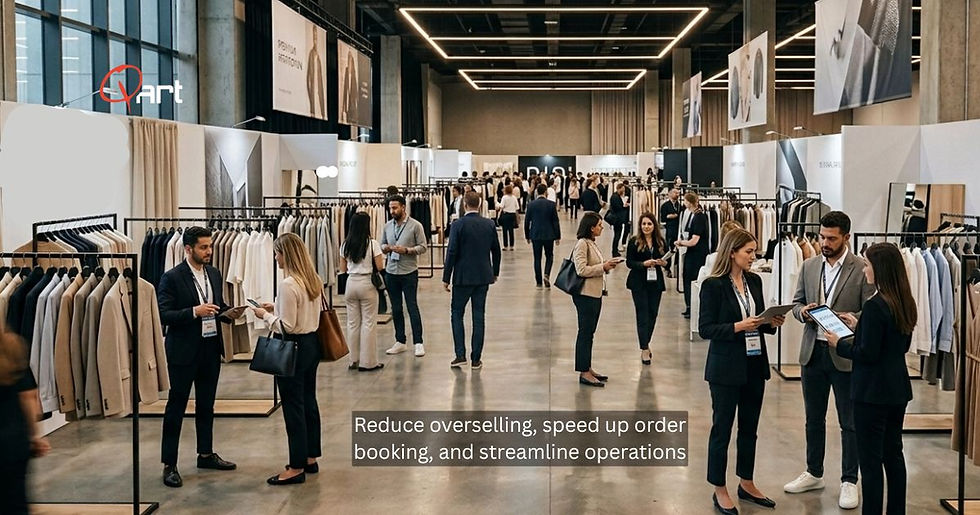
For brands managing large retailer networks across multiple regions, Qartsolutions' tradeshow sales automation also ensures that the right assortment is presented to the right buyer on the exhibition floor, with live inventory validation built in.
The Role of Order Data in Refining Regional-Specific Assortments
One of the most underused inputs in assortment planning is historical order data from regional buyers. Brands that capture structured order data through a B2B fashion portal can identify patterns that inform the next season's planning, including:
Which categories overperform in specific regions
Which styles consistently go unordered by regional buyers
Where size run depth needs to change to match local body type preferences
Which price points drive the highest order volumes by territory
This data loop is only possible when order management clothing brands run through a single, integrated platform rather than fragmented tools. Brands still relying on manual order capture miss the data they need to improve regional assortments over time.
As covered in Qartsolutions' post on fashion distributor order management, the shift to digital order management is a prerequisite for building the kind of data infrastructure that makes region-specific assortment planning reliable.
Common Mistakes in Regional-Specific Assortment Management
Even brands with strong planning capabilities make predictable mistakes when managing region-specific assortment:
Presenting the full catalog to every buyer
Without catalog segmentation, buyers in niche regional markets are forced to navigate styles irrelevant to their customers. This increases friction and reduces order confidence.
Ignoring regional size distribution
A size run that performs well in one market may not reflect the body type proportions of another. Brands that apply a single size curve globally often end up with significant regional overstock at certain sizes.
Relying on static line sheets
Printed or PDF-based line sheets cannot reflect live inventory, cannot be filtered by region, and cannot capture order data in a structured format. They are a bottleneck in the regional assortment process.
Treating all regional buyers the same
A boutique in a tourist-heavy coastal market has different needs than a multi-door retailer in an inland metro. Assortment strategy needs to reflect these differences at the account level, not just the country level.
Region-specific planning breaks down without fashion inventory management software offering real-time style-level stock visibility. A connected seasonal assortment planning tool tied to a B2B order management system for apparel prevents fulfillment errors before they happen and gives regional buyers the confidence to commit earlier and order deeper.
Building a Scalable Approach to Region-Specific Assortment
For fashion brands looking to improve how they manage region-specific assortment across their B2B network, the foundation is the same regardless of brand size or geography.
Start with structured order data. If your current order management clothing process does not produce clean, searchable data by region, retailer, and SKU, that is the first problem to solve.
For SS27, the brands winning regional shelf space are those using fashion wholesale software to present localized, inventory-backed catalogs before competitors even open their line sheets. SS27 season planning through a B2B platform means fewer errors, earlier order commits, and sharper regional decisions.
Invest in the right platform. A best b2b software solution for fashion is one that natively supports territory-based catalog segmentation, live inventory, and structured order capture. Qartsolutions delivers this as a fashion b2b order management platform built for the specific operational demands of apparel brands and their retail networks.
Use data to refine each season. Regional assortment planning is not a one-time exercise. Every order cycle produces data that should inform the next season's buying decisions.
As Uphance's assortment planning analysis notes, brands should regularly review their assortment strategies and adapt to changes in regional customer demand and market trends. The brands that build this review process into their B2B fashion Platform infrastructure are the ones that reduce markdowns, improve retailer retention, and build more accurate seasonal plans.
For a detailed look at how a B2B portal for fashion industry operations supports this at the exhibition level, Qartsolutions' post on fashion inventory software covers how live stock visibility and regional assortment management connect in a single tradeshow workflow.


Comments